Wanderlust
Crafted by Coast and Culture
Life in balance, shaped by Mallorca and Capri
Life in balance, shaped by Mallorca and Capri
Life in balance, shaped by Mallorca and Capri
There are places where landscape and culture exist in quiet alignment - where the rhythm of daily life is shaped as much by the sea as it is by the traditions that have grown alongside it. In the Mediterranean, Mallorca and Capri offer two distinct expressions of this balance. One defined by expansive terrain and rural heritage, the other by vertical drama and island ritual, yet both grounded in a way of living that feels measured, enduring and closely tied to destination.
Across these islands, experience is not constructed but inherited - shaped by generations who have moved with the seasons, the land and the water. To travel here is not simply to observe, but to step briefly into that rhythm.
Mallorca
In Mallorca, the landscape unfolds gradually. The Serra de Tramuntana rises along the island’s western edge, its limestone peaks forming a natural spine that shapes both climate and culture. Villages gather in its folds, while citrus groves and olive terraces extend towards the sea.
One of the most evocative ways to encounter this terrain is aboard the historic railway linking Palma and Sóller. In operation since 1912, the train - with its polished wood interiors and brass fittings - moves at a deliberate pace, tracing a route through tunnels carved into the mountains and valleys thick with orange and lemon trees. Along the way, the island’s agricultural heritage comes into focus, reflected in tastings that draw on small-scale producers: cured meats, local cheeses, pastries such as ensaïmadas, and local vintages shaped by the surrounding soil.
By late afternoon, attention turns to the coastline. Departing from Port de Sóller, boats follow the contours of the Tramuntana range as it meets the Mediterranean. Cliffs fall sharply into clear water, while coves such as Cala Tuent and Sa Calobra remain largely untouched, their narrow inlets framed by pine and stone. Time slows here - marked by pauses to swim, the scent of wild rosemary carried on the breeze, and the gradual shift of light as the sun lowers towards the horizon.
Guests can pause to swim in the warm Mediterranean or snorkel in sheltered bays, before watching the sun melt into the horizon – the quiet magic of Mallorca at golden hour.
Island Helicopter Tour
For a view few ever experience, a private helicopter flight offers a breathtaking perspective over Mallorca’s diverse landscapes. Taking off from Port de Sóller, the journey soars above the rugged Tramuntana mountains - their limestone peaks etched against the sky - before tracing the island’s northern coastline where cliffs plunge dramatically into turquoise seas.
From this height, Mallorca’s contrasts unfold in vivid detail: the emerald canopy of pine forests, the silvery sheen of olive groves, and the glimmering coves that curve around the coast.
Capri
If Mallorca unfolds, Capri rises. The island’s defining feature is its verticality - cliffs that lift sharply from the sea, pathways that climb rather than stretch, and views that expand with every step upward.
The most direct expression of this is La Scala Fenicia, or the Phoenician Steps. Carved into the rock face, the 921 steps once formed the island’s primary connection between Marina Grande and Anacapri before the construction of a road in the late 19th century. For centuries, they were part of daily life, used by local women transporting water from the Truglio spring to the village above.
Today, the ascent is less necessity than experience, but its character remains unchanged. As the path rises, the harbour recedes and the horizon opens, revealing the wider sweep of the Gulf of Naples.
At the summit, Anacapri offers a quieter counterpoint to the island’s more frequented centre. Here, movement slows. Narrow streets lined with bougainvillea lead to small workshops and shaded piazzas, where daily life continues with little interruption. Nearby, Villa San Michele - once the home of Swedish physician and writer Axel Munthe - overlooks the coastline from its terraced gardens, offering one of the island’s most enduring views.
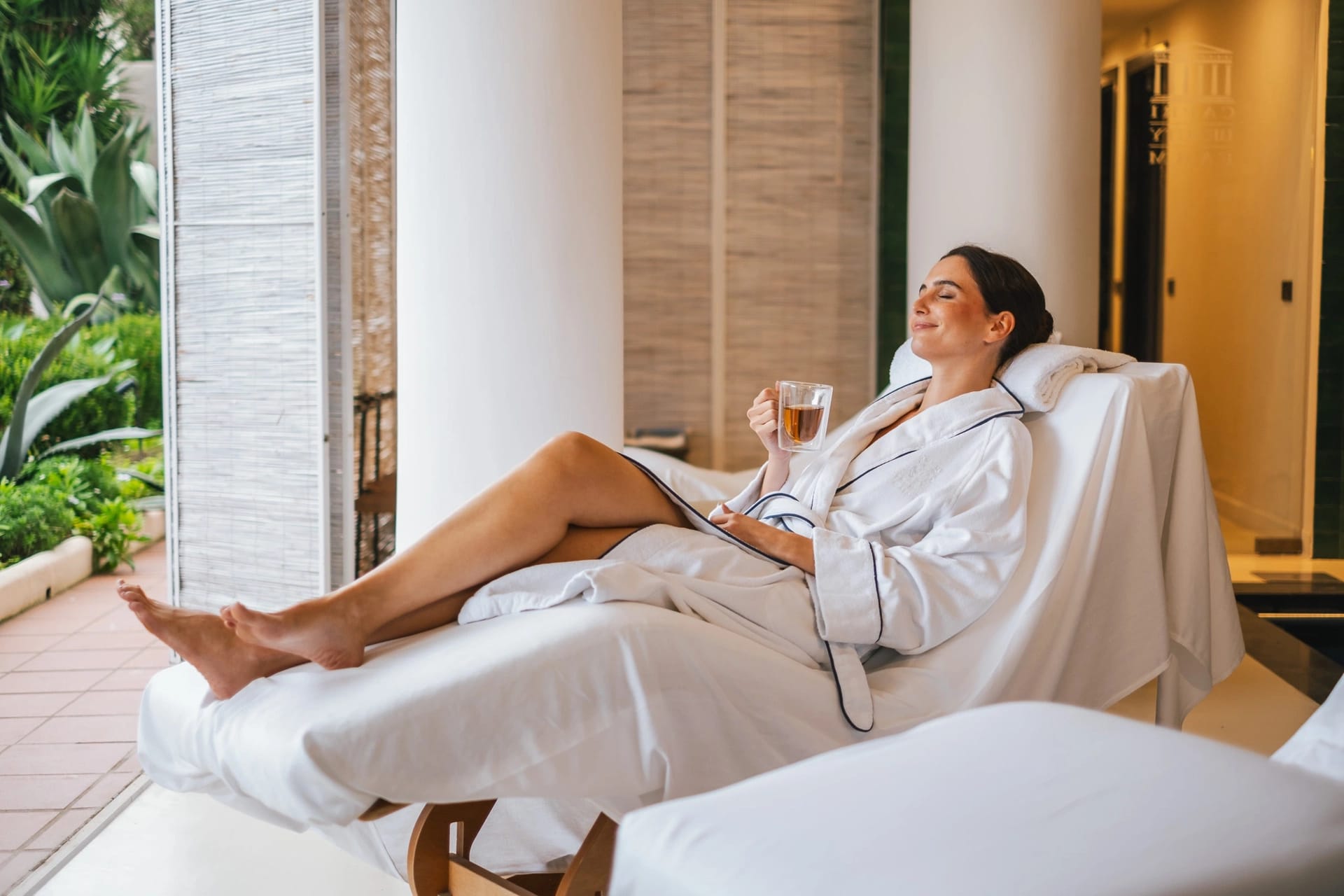
After time spent navigating the island’s steep paths, restoration becomes part of the rhythm. At the Capri Medical Spa, treatments draw on longstanding therapeutic practices. The Leg School® therapy, developed by the late Professor Francesco Canonaco, combines mineral-rich clay with cooling bandages to improve circulation - a practical response to the physical demands of the terrain.
The spa is now directed by internationally recognized Dermatologist Chantal Sciuto, a leading authority in aesthetic dermatology and anti-aging medicine, exemplified by her signature protocol Beauty Couture©, designed to enhance natural beauty and facial harmony through a refined, medical, and tailored approach.
Beyond the Shoreline
While both islands are defined by their relationship to the sea, that connection does not end at the water’s edge. For those who wish to extend their experience, the Mediterranean itself becomes a continuation.
A private charter aboard the Maltese Falcon offers one such perspective. The 88-metre sailing yacht, with its distinctive DynaRig system, moves fluidly between coastlines, carrying forward the same sense of rhythm found on land.

Life on board is shaped by environment rather than schedule. Mornings begin in quiet anchorages, afternoons unfold through swimming and time on deck, and evenings are defined by uninterrupted horizons as the light fades. The experience mirrors that of Mallorca and Capri - grounded in simplicity, guided by the elements, and removed from urgency.
At Jumeirah Mallorca and Jumeirah Capri Palace, this balance between coast and culture is not imposed, but revealed. Each setting offers a different perspective on Mediterranean life, yet both arrive at the same conclusion: that the most lasting form of travel is not defined by escape, but by a return to what feels steady, elemental and true to place.